B-1/E-23, Mohan Co-Operative Industrial Area, Mathura Road, Delhi-110044, India


- Informative/Generic Topics
- 16-Oct-2026
- -
- 0 Comments
You get a contract to sign and hidden on page six is a rule that could cost your business a lot of money.
That rule is often called an indemnification clause and it says who pays when something goes wrong. This concept will appear in contracts with your vendors, service providers and partners. The article will make it easy for you to understand the meaning of this term and tell how electronic signature software facilitates the signing of such contracts.
What Is Indemnification in Simple Words
The term indemnification means that one party agrees to compensate for losses incurred by the other party.
One party making that promise is called the indemnifier, and the party that receives compensation is referred to as the indemnitee. When something happens that is covered by the indemnification agreement, the indemnifier pays for losses as well as legal fees. To illustrate, an advertising agency uses a copyrighted photo, thus being sued by the photo owner.
The money risk goes to the side that can best control it.
How an Indemnification Clause Works
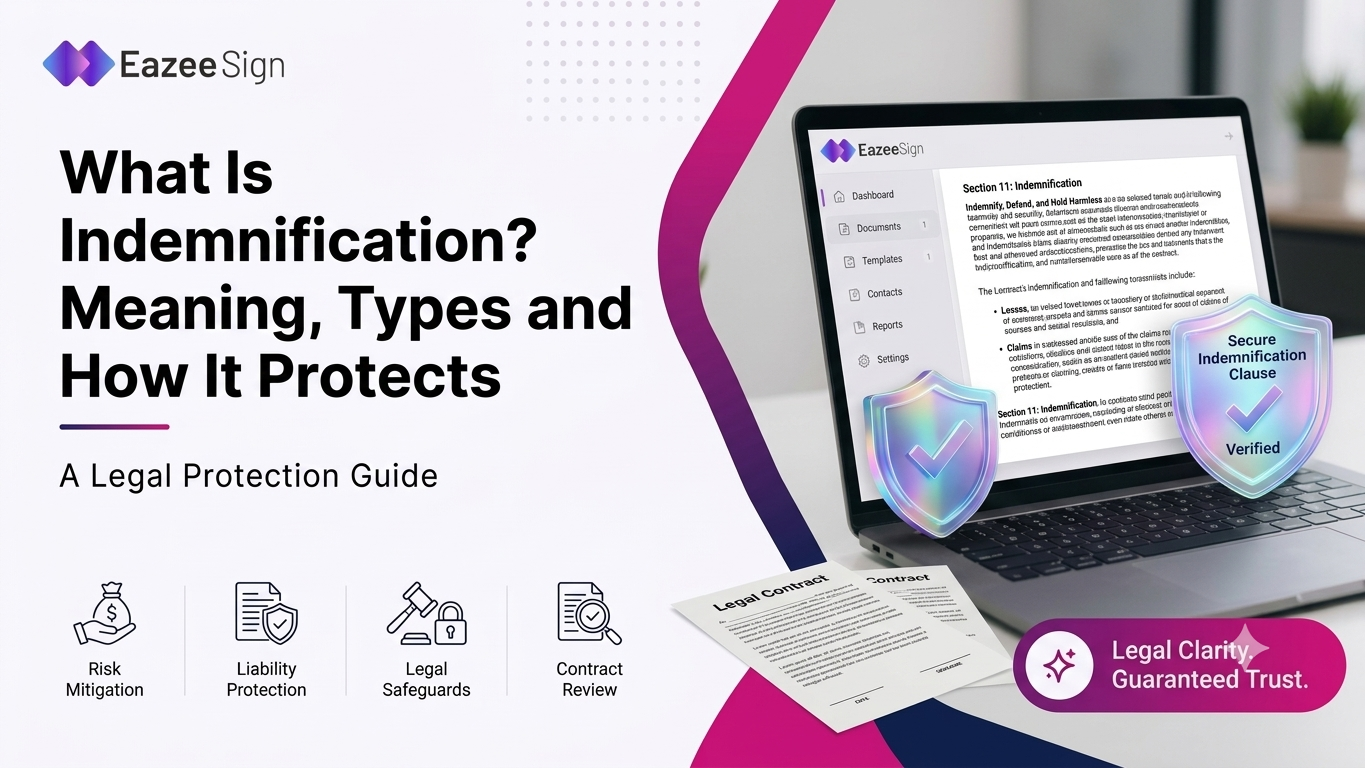
The clause of indemnification is the section of the contract that specifies how this cooperation should work.
This clause stipulates who needs to be protected and under what conditions, as well as what costs will be compensated in case of indemnification. The clause can as well include an obligation to provide defense, which means that the supplier of indemnification must conduct legal proceedings.
Moreover, it should be mentioned that some cases will not be included in the indemnification meaning that there are limitations in this clause.
Why Indemnification Matters in Business
Without clear rules, one mistake from a vendor can leave your business with a huge bill.
Even when a business did nothing wrong, a lawsuit can cost a lot of time and money. An indemnity clause makes things clear by putting the cost on the side — that caused or controlled the risk. This helps companies sign deals without constant worry.
It acts like a safety net that most good contracts include.
One Way vs Mutual Indemnification
Protection can go one way or both ways.
In a one way deal, only one side gives protection, like a software company that protects a customer from copyright claims. In a mutual deal — each side protects the other from its own mistakes. Partnerships often use the mutual type because both sides bring work, data or materials to the project.
Picking the right type keeps things fair for both sides.
Indemnification vs Hold Harmless Agreements
The terms indemnify and hold harmless are often used by many people interchangeably, as though they were synonyms. When we say to indemnify someone, we mean to pay damages after the loss or damage has occurred.
A hold harmless clause is rather similar in that it ensures that one party cannot sue another party for the specific losses or injuries, without negating the issue of damage. Most of the service and building contracts contain both terms, such as a contractor agreeing to indemnify any injuries suffered by his employees at the customer’s premises.
Different states and countries may read these words differently — so the exact wording matters.
Where Indemnification Clauses Show Up
Almost every business contract has some kind of indemnity rule.
Vendor contracts use it to cover broken or unsafe products and service contracts use it when bad advice leads to a lawsuit. Software contracts often protect customers if data is stolen or another company claims a patent. Partnership deals use it to share the risks of joint ads, money or data.
If an outside person could make a claim an indemnity clause is usually nearby.
Signing Indemnity Agreements With Electronic Signature Software
Indemnity agreements often go through many edits before anyone signs.
Electronic signature software lets each person read the final copy and sign on a phone or laptop in just a few minutes. Each signature is saved with the time and the name of the signer. This saves the wait for printing, scanning or mailing papers.
Faster signing also lowers the chance that someone signs an old version by mistake.
Why Digital Signature Software Adds Extra Protection
An indemnity clause only helps if nobody can secretly change it after it is signed.
Digital signature software links each signature to the signer using coding that keeps the file safe and checks who the person is. If someone changes the file later, the change shows up right away. It also keeps a record of who opened the file — when it was signed and on which device.
This proof matters a lot if the contract ever ends up in court.
What to Check Before Agreeing to an Indemnity Clause
You can avoid a big shock by conducting some simple investigations.
Firstly, find out who is protected, as there are clauses covering only the company, as well as ones covering employees and managers. Then, ensure that both legal fees and settlements are included and check if there are any caps on how much each party must cover. Also, inquire whether the agreement is reciprocal depending on contribution made by both parties.
For big contracts — ask a legal expert to read the clause before anyone signs.
Frequently Asked Questions
What does indemnification mean in a contract?
It means one side agrees to pay for the other side’s losses, claims or legal costs. This moves the money risk to the side that can control it best.
What is the difference between one way and mutual indemnification?
One way protects only one side. Mutual means both sides protect each other from their own mistakes.
Is indemnification the same as a hold harmless clause?
Not always. Indemnification pays back losses while hold harmless is more like a promise not to blame the other side.
Can an indemnity agreement be signed with electronic signature software?
In most cases, yes. Check for special rules for your contract or location first.
How does digital signature software help with indemnity agreements?
It keeps a record of who signed and shows if anyone changed the file afterward.
Do small businesses need indemnification clauses?
Yes. One mistake from a vendor can cause a big bill and a clear clause says who pays.n