B-1/E-23, Mohan Co-Operative Industrial Area, Mathura Road, Delhi-110044, India


- Electronic Signature
- 24-Sep-2026
- -
- 0 Comments
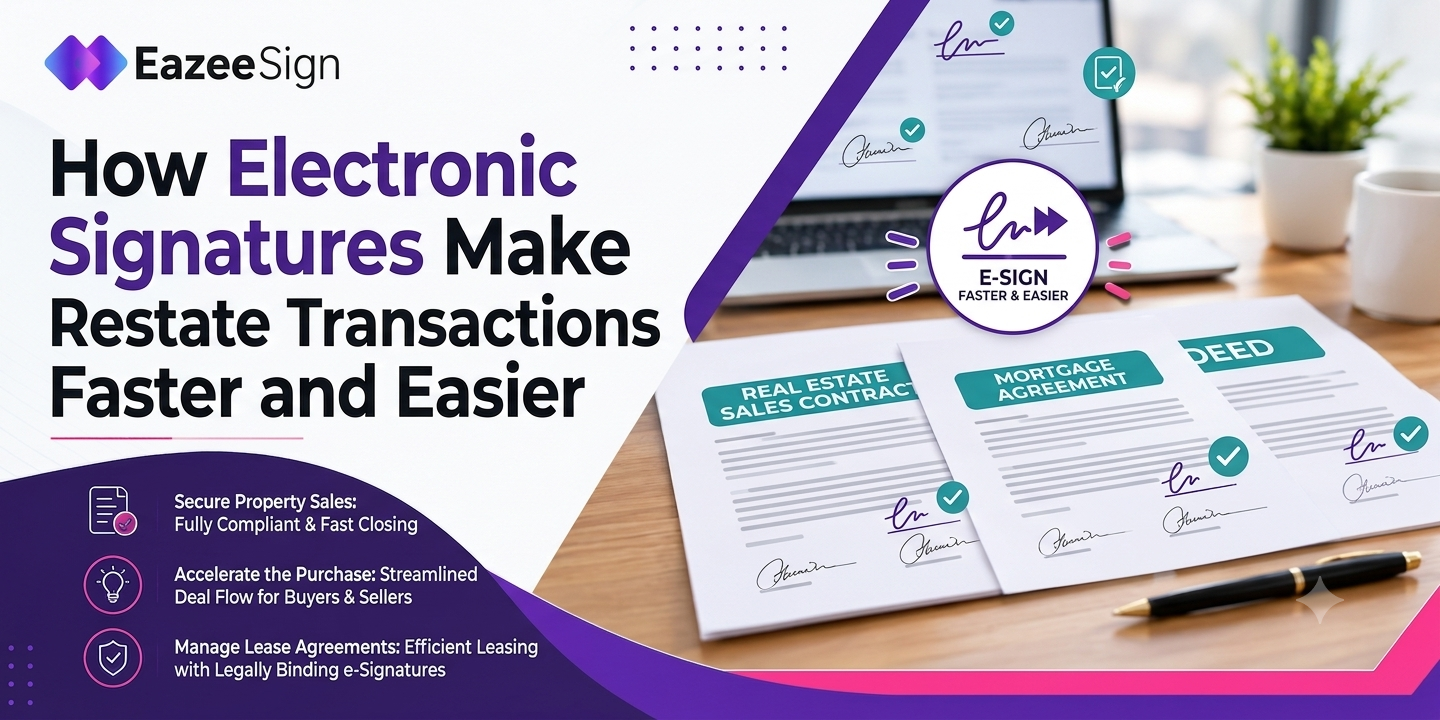
A closing gets pushed back three days because one signature sat in someone inbox over a weekend. Ask any agent and they’ve got a story just like this one. Electronic signatures in real estate pexist specifically to stop this from happening and the shift away from printed contracts has changed how quickly deals actually move from offer to close.
The Weekend Delay Problem Electronic Signatures in Real Estate Solve
Real estate does not run on a nine to five schedule but paper contracts often do. A buyer decides to sign on a Saturday evening but the listing agent can not get the document notarized or delivered until Monday morning. By then a competing offer might already be on the table.
Electronic signatures remove this entirely. A document sent Saturday night gets signed Saturday night, no waiting for offices to reopen or someone to be near a fax machine. That single change alone shaves real days off a typical transaction timeline.
Why Paper Contracts Slow Real Estate Deals Down
Think through the old process step by step. Print the offer. Drive it to the client or mail it. Wait for a signature. Scan it back in. Email it to the next party. Repeat for every additional signer involved, buyer, co-buyer, seller, sometimes a lender too.
Each of those steps is a place where things get stuck. Someone traveling. Someone forgets to check their mailbox. A scanner jams at the worst moment. None of these delays reflect anything about whether the deal itself is solid they are just friction built into a process that predates smartphones by decades.
What Changes When Agents Switch to an eSign App
Switching to electronic signatures in real estate collapses most of that chain into a few minutes. A listing agreement purchase offer or lease gets uploaded through an eSign app, signature fields get placed and the document goes out through email or text. The recipient opens it on whatever device is closest reviews the terms and signs.
That is it. No printer, no scanner, no courier. The agent gets notified the second it is done and the next step in the transaction can start immediately instead of waiting for a physical document to make its way back through the mail.
Faster Offers Mean Fewer Lost Deals
Competitive markets punish slow paperwork. A seller with three offers on the table isn’t going to wait around for the fourth one to finish printing. Agents using electronic signature software can get an offer in front of a client and signed within the same conversation sometimes while still standing in the property.
That speed directly affects outcomes. Buyers who can move fast win more often in tight markets and sellers appreciate agents who do not let paperwork stall momentum right when it matters most.
Handling Multiple Signers Without the Back and Forth
Most real estate documents need more than one signature. A purchase agreement might require a buyer a co-buyer and sometimes a co-signer, all before the seller even sees it. Coordinating that on paper usually means one person physically carrying a document between multiple households.
A proper eSign app routes the document automatically. Each signer gets notified when it is their turn and the agent can watch the whole thing progress in real time instead of calling around asking whether everyone signed yet. For a busy brokerage juggling several transactions at once this alone removes a significant chunk of daily administrative work.
Disclosures and Addenda Without the Paper Trail
Every transaction accumulates paperwork beyond the core purchase agreement property disclosures, inspection addenda, financing contingencies sometimes HOA documentation. Each of these traditionally meant another round of printing and signing.
Electronic signature software handles these the same way as the main contract quickly and without a separate physical trip. Templates help here too — since disclosure forms tend to follow a similar structure deal after deal. Reusing a saved template instead of rebuilding the document from scratch saves an agent real time across a busy month of closings.
Fewer Errors With Electronic Signature Software
A missed initial on page four or a signature in the wrong field forces a document back through the entire signing chain again. That is not just annoying — it can cost a full day or more depending on how many people need to resign.
Digital signing walks a signer through every required field before submission, flagging anything left blank. This built in check catches mistakes before they become a delay, which matters enormously in a transaction where every extra day carries real financial stakes for someone involved.
Security That Holds Up If a Signature Ever Gets Questioned
Real estate deals involve serious money which means a signed contract sometimes needs to hold up under scrutiny later. Every signature through a proper platform comes with a timestamp, an audit trail and identity verification tied to the signer, records a printed page simply can not provide on its own.
If a dispute ever comes up about who signed what and when, that trail settles it quickly. A stack of paper offers nothing close to this kind of clarity and reconstructing a timeline from physical documents after the fact is often close to impossible.
Legal Standing for Electronic Signatures in Real Estate Across Regions
Electronic signatures carry legal weight in most parts of the world today though the specific framework varies by location. In India, this falls under the IT Act. Other regions rely on their own regulations — but the shared principle stays consistent, clear consent, demonstrated intent to sign and a reliable way to trace the signature back to the actual person.
A properly built electronic signature software is designed around meeting these requirements directly, so a digitally signed real estate contract holds the same standing as one signed with a pen in front of a notary.
What Agents Should Look For in an eSign App
Not every signing tool fits real estate work equally well. Worth checking for template support, since repeat documents like standard disclosures benefit enormously from a saved format. Multi channel delivery matters too — since clients often respond faster to a text message than a buried email.
Security certifications are worth confirming as well. Recognized standards like SOC 2 and ISO 27001 involve independent audits of how a provider actually handles data, offering more assurance than a vague claim on a website. An eSign app that checks these boxes tends to fit real estate workflows without forcing an agent to compromise on speed or protection.
A Faster Way Forward
Real estate has always rewarded whoever moves quickest without cutting corners and electronic signatures deliver exactly that balance. Deals that once took days to finalize now close in hours, disclosures and addenda move without a separate trip anywhere and every signature carries a clear record behind it if questions ever come up later.
Agents who’ve made the switch rarely look back at the old process fondly. Once paperwork stops being the bottleneck — the actual work of closing deals gets a lot easier to manage.