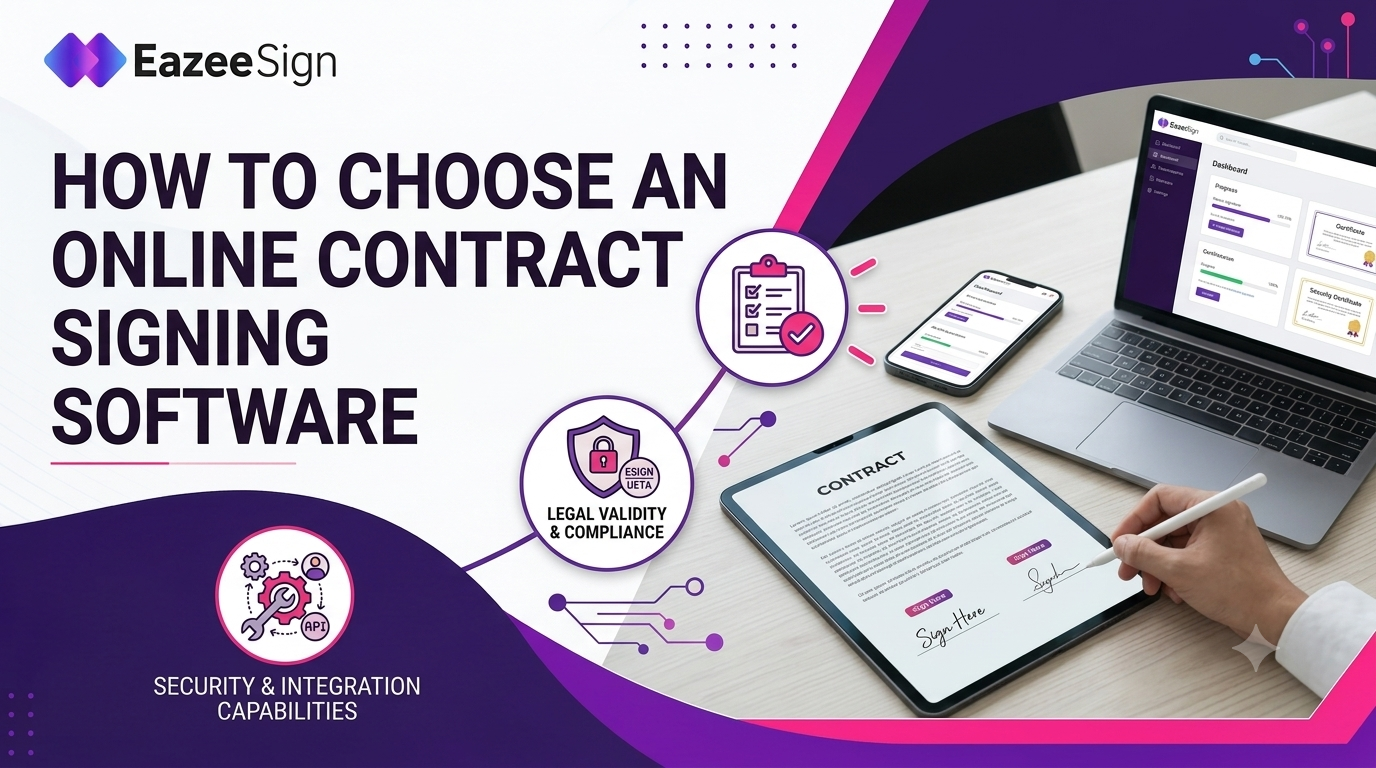
A vendor contract sits half finished because nobody can agree on which tool to sign it with. Sounds trivial until it happens — third time in a month. Picking the right online contract signing software isn’t just about ticking a feature list, it is about finding something that actually fits how a business signs documents day to day without adding friction nobody asked for.
Here is what actually matters when comparing options.
Start With What Your Contracts Actually Look Like
Before comparing tools, it helps to look inward first. Does the business mostly sign routine NDAs and vendor agreements or does it regularly handle high value contracts that need stronger legal backing? A small team signing a handful of documents a week has very different needs than a company processing hundreds of contracts monthly across multiple departments.
Online contract signing software built for high volume use should offer bulk sending and templates. A business dealing with fewer, higher stakes documents might care more about identity verification and audit depth than speed. Knowing this upfront saves a lot of wasted comparison time later.
Look for AI Features That Actually Save Time
This is where things have shifted quite a bit recently. Older online contract signing software mostly just captured a signature and called it done. Newer tools go further, using AI to actually read through a contract before it gets sent out.
AI based risk analysis for instance, scans a document for unusual clauses, missing terms or language that does not match standard practice flagging it before signatures are collected rather than after a dispute forces someone to reread the whole thing. Document summary features condense a lengthy contract into a quick overview — useful when someone needs to sign something fast but still wants to know what they are agreeing to. Key clause analysis goes a step further, pulling out payment terms, termination clauses and liability sections automatically so nobody has to hunt through pages of legal text manually.
Document comparison is another one worth checking for. When a contract goes through multiple revisions, being able to instantly see what changed between versions beats manually scrolling through two documents side by side trying to spot differences.
Templates Matter More Than People Expect
A business sending the same type of document repeatedly, offer letters, NDAs, vendor agreements, wastes real time rebuilding each one from scratch. Reusable templates fix this directly, letting a team save a standard format once and reuse it indefinitely.
This is not just a convenience feature either. Templates reduce the chance of a required field getting missed or a clause being worded inconsistently across different contracts. For HR and sales teams especially — this single feature can save several hours a week once volume picks up.
Check How the Tool Handles Multiple Signers
Contracts rarely involve just one signature. A vendor agreement might need sign off from procurement, legal and finance before it is finalized. Good online contract signing software should route a document to each signer automatically, notifying them the moment it’s their turn rather than requiring someone to manually chase each person down.
Real time status tracking helps here too. Knowing whether a document been viewed, signed or is still sitting untouched removes the guesswork and automated reminders mean nobody has to send an awkward follow up email asking if someone’s gotten around to it yet.
Security Should Never Be an Afterthought
Handing sensitive contracts to any digital signature software means trusting that provider with information that could cause real damage if mishandled. Look for proper encryption both while a document’s being sent and once it is stored along with a detailed audit trail showing exactly who signed what and when.
Recognized certifications matter here more than marketing claims. SOC 2 and ISO 27001 both require independent audits of how a company actually handles data, rather than resting on internal promises nobody verified. A provider willing to be transparent about these certifications is generally one worth taking seriously.
Legal Validity Across Different Regions
A signature only means something if it holds up legally wherever the business operates. In India, this comes down to compliance with the IT Act. Other regions follow their own frameworks, but the shared requirement across most of them stays consistent, clear consent, demonstrated intent to sign and a reliable way to trace a signature back to whoever actually made it.
Good electronic signature software should be built around meeting these requirements directly rather than treating compliance as something added later. Skipping this check is how businesses end up with contracts that look fine on paper but fall apart the moment they’re actually challenged.
Integration With Tools You Already Use
A signing tool that operates in complete isolation just creates extra manual work. Check whether the software connects with cloud storage, a CRM or whatever document system a team already relies on daily. A signed contract landing automatically in the right folder or updating a deal’s status in a CRM without anyone manually moving files, adds up to real time saved over months of use.
Pricing Transparency Is a Bigger Deal Than It Sounds
Some providers advertise a low starting price, then bury usage limits or per document charges somewhere in the fine print. Before committing, confirm exactly how many documents are included, whether adding team members costs extra and what happens once a plan’s limit gets exceeded.
A trustworthy provider lists all of this clearly upfront, rather than surprising anyone with an unexpected charge halfway through the month.
Why EazeeSign Is Worth Considering
EazeeSign brings the AI side of this together in one place, offering document summaries, key clause extraction, risk analysis and document comparison alongside straightforward signing and reusable templates. As an eSign app, it is built to handle both the routine, high volume signing most businesses deal with daily and the more sensitive contracts that genuinely benefit from an extra layer of review before anything gets sent out.
Backed by SOC 2 and ISO 27001 certifications, it also checks the security and compliance boxes that matter regardless of which features a business ends up using most.
Final Thoughts
Choosing the right online contract signing software comes down to matching features to how a business actually operates, not just picking whatever has the longest feature list. Security and legal validity should not be negotiable. Beyond that — AI features that genuinely save review time, solid template support and transparent pricing are what separate a tool that fits into daily work from one that just adds another layer of friction nobody needed.
Frequently Asked Questions
What should a small business prioritize when choosing online contract signing software?
Ease of use and pricing transparency usually matter most for smaller teams, though basic security features like encryption and audit trails should not be skipped even at low volume.
Do AI features in digital signature software actually make a difference?
Yes, features like risk analysis and key clause extraction help catch contract issues before signing rather than after, which saves time and reduces the chance of a costly oversight.
Is online contract signing software legally valid for high value contracts?
Yes, as long as the software complies with relevant regulations like India’s IT Act and offers proper identity verification and audit trails for the signature.
How important are templates when choosing an eSign app?
Fairly important for any business signing repetitive documents — since templates save time and reduce the risk of missing a required field or using inconsistent wording.
What certifications should I look for in electronic signature software?
SOC 2 and ISO 27001 are strong indicators, since both require independent audits of how a provider actually secures data rather than relying on unverified claims.
Can one tool handle both simple and complex contracts?
Yes, a well built online contract signing software should support lighter processes for routine documents and stronger verification or AI review for higher stakes contracts.