

B-1/E-23, Mohan Co-Operative Industrial Area, Mathura Road, Delhi-110044, India
- Digital Signature Software
- 01-Oct-2026
- -
- 0 Comments
Ask ten people what digital transformation means and most will mention new software, an app, a system upgrade. Fair enough. But inside most companies, it starts somewhere much smaller. One slow process finally gets fixed. Document signing is usually that process, since it touches nearly every department, HR onboarding, vendor contracts, sales approvals, all of it.
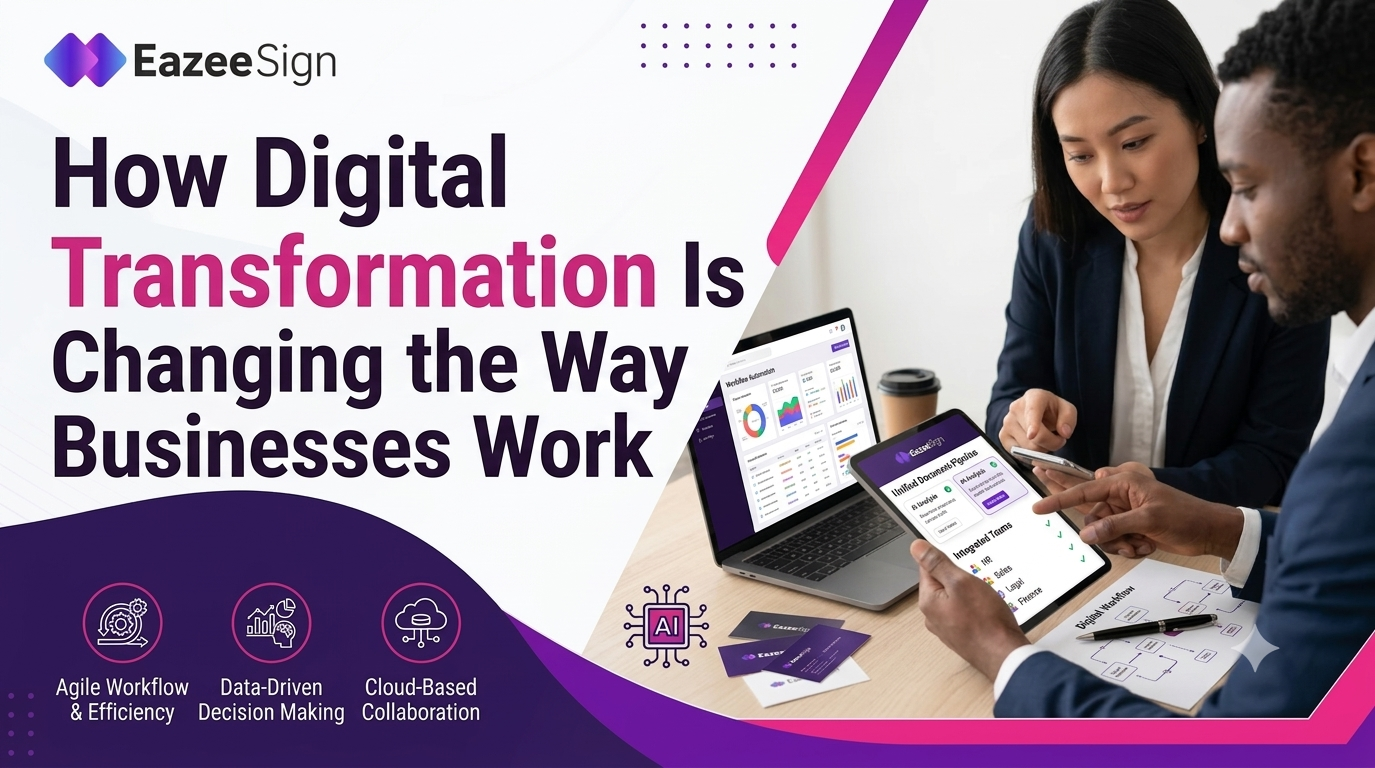
This piece looks at what actually changes when a business goes digital, why signing tends to be the starting point and where a platform like EazeeSign fits into that shift.
What Digital Transformation Actually Looks Like Inside a Business
It is not really about buying tools. It is about removing the small, annoying frictions that slow everything down. An approval sitting on someone’s desk. A contract traveling between two offices just to get a signature. Records buried in a filing cabinet instead of a search bar.
Paper is usually the most visible bottleneck and everyone has felt it at some point. A vendor agreement stuck for three days because it needed to physically move between cities. An offer letter waiting on one signature before onboarding can even begin. None of this makes headlines. It just quietly costs time, week after week.
Digital Signature Software: A Core Part of Business Digitization
Signing is often one of the first things businesses digitize and the reason is simple enough. Every department needs it. HR needs signed offer letters. Procurement needs signed vendor contracts. Sales needs signed proposals. Legal needs signed agreements before anything can move forward. Digital Signature Software removes the physical bottleneck from all of it, at once, rather than one department at a time.
Once signing moves online, approvals stop depending on someone being in a specific building on a specific day. A contract gets reviewed, signed and filed inside minutes. The document carries a timestamp and an audit trail that paper simply never offered. For a business trying to move faster without cutting corners, this is usually where the biggest gain shows up first.
Electronic Signature Software vs Paper Based Workflows
Put the two side by side and the gap is obvious. Paper contracts can take days to circulate, longer across offices or time zones. Electronic Signature Software collapses that into minutes. Documents move instantly and people sign from wherever they happen to be.
Errors drop too. Missing signatures. Undated pages. A document that went missing somewhere between two desks. Paper produces all of this regularly and each one means rework. Digital workflows catch incomplete fields automatically before anything counts as final. Storage improves in a similar way. Digging through old filing cabinets for a three year old vendor agreement is nothing like pulling it up in a search bar in five seconds.
The gap matters most where paperwork volume is highest, HR onboarding, procurement, sales agreements, departments where the time saved compounds week over week rather than showing up once.
The Role of an eSign App in a Mobile First Workplace
Work does not happen only at a desk anymore, so signing should not either. An eSign App lets approvals happen wherever people actually are. A sales lead closing a deal between two meetings. An executive approving a contract from an airport gate.
This matters more now that remote and hybrid work is just normal. Cross department approvals used to wait until everyone was physically in the same building. Now a document moves between departments and gets signed without anyone stepping away from what they were doing. Security does not loosen just because the device changed, either. Two factor authentication, browser based signing, no app download required on the recipient’s end. Fast and protected, both at once.
What to Look for in Digital Signature Software Before Adopting It
Not every platform grows with a business the same way. A few things separate a good long term choice from one that just adds complexity.
Compliance comes first. In India, Digital Signature Software should align with the Information Technology Act, 2000, so a signed document holds up if anyone ever questions it. Audit trails matter almost as much, since every action on a document should be traceable, not just the final signature at the end. Ease of use deserves real weight too and this one gets overlooked constantly. A platform that needs a training session defeats half the point, especially for staff who just need to send or sign something without a learning curve attached.
Integration rounds it out. A signing tool that fits into whatever systems a company already uses tends to actually get adopted, instead of sitting half used next to the old process everyone secretly kept.
How EazeeSign Supports Digital Transformation
EazeeSign was built around this exact shift. Electronic and digital signature workflows live inside one platform, so there is no juggling two separate tools for two related jobs. Everyday agreements move through the electronic signature workflow. Documents needing certificate backed verification run through the digital signature workflow instead.
AI adds another layer for growing teams. It summarizes lengthy documents, extracts key dates and approvals and flags anything unusual before a signature goes on. A complete audit trail, two factor authentication, bulk sending, automated reminders, all of it sits underneath. And because it is also an eSign App, approvals do not have to wait for office hours.
A free trial with full feature access is available, which makes it easy to test the workflows on real documents before committing to anything.
Final Thoughts
Digital transformation tends to succeed when it starts with the friction people actually feel day to day and signing is usually the clearest example of that. Businesses that move it online tend to see faster approvals, cleaner records, fewer delays between departments that used to sit waiting on each other. What starts as one small operational fix often ends up being the thing the rest of a company’s digital shift gets built on.
Frequently Asked Questions
What is the difference between Digital Signature Software and Electronic Signature Software?
Electronic Signature Software covers any digital method of showing agreement, typing a name, clicking to accept. Digital Signature Software is narrower, relying on certificate backed encryption to verify authenticity and catch tampering.
Why do businesses usually digitize signing first?
Because almost every department runs into it eventually, HR offer letters, vendor contracts, sales agreements. It tends to be the fastest, highest impact piece of digital transformation to adopt.
Is Digital Signature Software legally valid in India?
Yes. It falls under the Information Technology Act, 2000, giving signed documents legal standing comparable to a handwritten signature.
Can employees sign documents from a phone using an eSign App?
Yes. A good eSign App lets documents be reviewed and signed from a phone or tablet, with two factor authentication keeping the process secure.
How does EazeeSign support businesses going through digital transformation?
It combines electronic and digital signature workflows, AI powered document review, audit trails and mobile signing under one platform, with a free trial available to test it directly.




