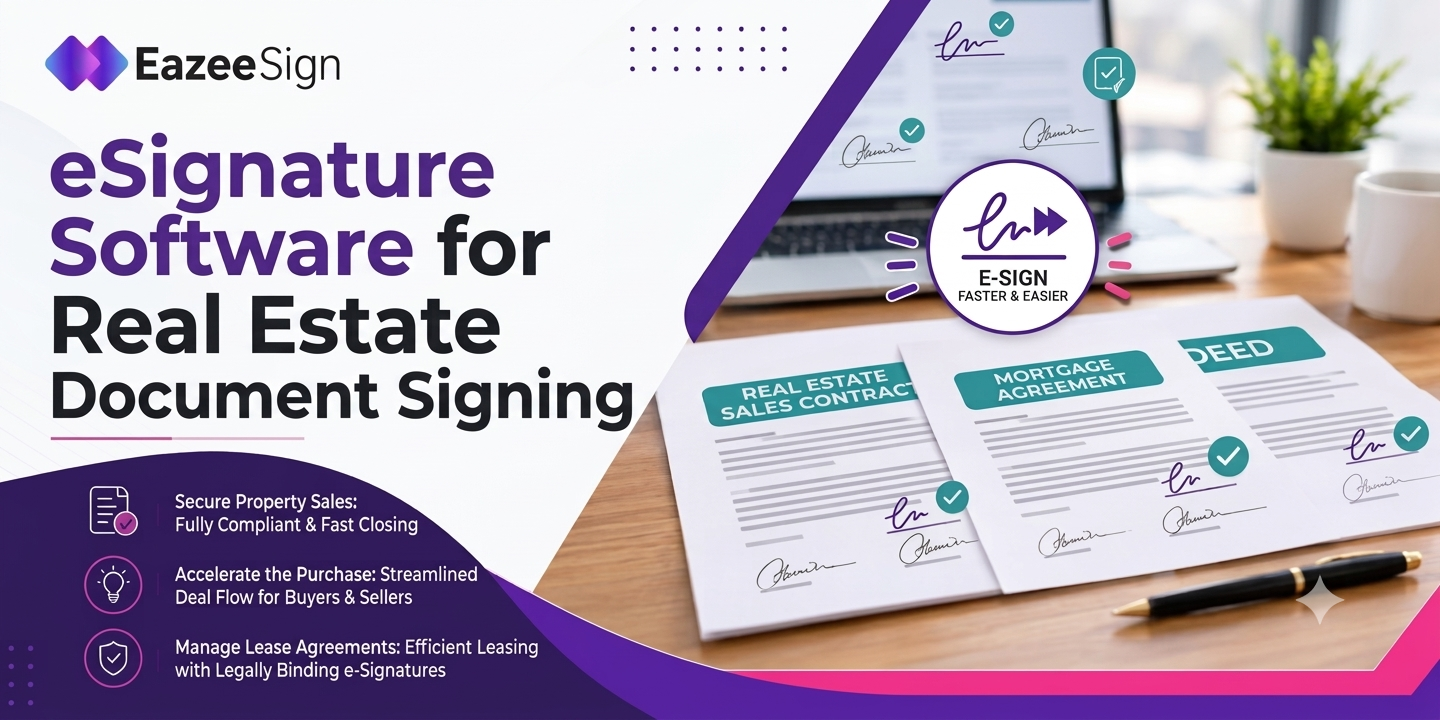
A buyer’s ready to sign, but the agent’s stuck at a client meeting across town with the only printer nowhere nearby. By the time paperwork actually gets sorted, the buyer’s already eyeing two other listings. This kind of scenario plays out constantly in real estate and it’s exactly why eSignature Software for real estate has stopped being a nice extra and become something closer to a basic requirement for agents trying to keep deals moving.
Why Speed Actually Decides Whether a Deal Closes
Real estate timelines rarely leave much room for delay. A seller weighing several offers is not going to wait around while one buyer’s paperwork catches up. A buyer sitting on a signed offer for two extra days might lose financing approval or just lose interest and move on to the next listing entirely.
Paper based signing adds friction at almost every step, printing an offer, driving it somewhere to get signed, scanning it back, then emailing it along to whoever’s next in the chain. Each step is a fresh chance for the whole thing to stall out. Electronic signature software cuts through most of that, letting listing agreements, purchase offers, disclosures and lease paperwork move at the pace a fast market actually demands.
Where Real Estate Agents Actually Use eSignature Software for Real Estate
A handful of document types come up constantly during a transaction and each one benefits a little differently from moving off paper.
Listing agreements often go through a round or two of edits before a seller’s happy with the terms. Purchase offers and counteroffers need to move fast, sometimes within a few hours, especially when multiple buyers are circling the same property. Disclosures and addenda tend to pile up as a deal moves forward and lease agreements for rental units need quick turnaround too, particularly when a tenant’s trying to lock something in before someone else beats them to it.
Handling all of this through digital signature software means an agent is not stuck waiting on a fax machine or hunting down a scanner that is conveniently out of toner right when it is needed most.
What eSignature Software Actually Solves for Agents
The benefits go beyond just skipping a trip to the printer. A few things stand out specifically for agents working real estate deals day to day.
Clients can review and sign from whatever’s in their hand, phone, tablet, laptop, cutting turnaround down to minutes rather than days. That speed alone lowers the odds of a buyer getting cold feet or a seller entertaining a competing offer while paperwork drags on somewhere. Digital signing also just reads as more professional to clients who already handle everything else in life from their phone, which matters more for an agent’s reputation than it might seem at first glance.
Guided signing fields cut down on errors too. A missed initial or an unsigned page is one of the more common reasons a document bounces back and forth before closing ever happens. And every signature carries an audit trail with it, timestamps, signer details, a tamper evident record that holds up fine if a dispute ever comes up down the line.
Choosing Digital Signature Software Built for Real Estate Workflows
Not every eSign app fits how real estate actually operates day to day. A few features matter more here than in most other industries.
Templates save genuine time for agents handling repeat paperwork like standard listing agreements or common disclosure forms. Sending through multiple channels matters too, since plenty of clients reply faster to a text than an email sitting unread somewhere in their inbox. Bulk sending or shared signing links come in handy when a document needs sign off from several people at once, buyer, co-buyer, agent, sometimes a lender thrown in too.
Security should not be an afterthought either, not with how much personal and financial detail moves through a single real estate transaction. Look for encryption, identity verification options and clear compliance with recognized legal frameworks, so a signed contract actually holds up if it is ever questioned later.
A Typical Workflow Using Electronic Signature Software
Imagine how a purchase offer might move through a proper eSignature setup. An agent uploads the offer, drops signature fields where they are needed, then sends it out through email or text depending on what the client prefers. The buyer opens it from their phone, reads through the terms, signs within minutes. The agent gets notified the second it’s signed, no separate phone call needed just to confirm it actually happened.
If the seller comes back with a counteroffer, the same process runs again, usually wrapping up the same day instead of dragging into the next one. For an agent juggling several deals at once, that kind of speed adds up fast, less time spent chasing signatures, more time actually working with clients who need attention.
Security and Compliance Real Estate Agents Should Expect
Given how much money and personal information sits inside a single transaction, security really can’t be optional here. A trustworthy electronic signature software should offer encryption both in transit and storage, a detailed audit trail for every document and identity verification suited to whatever’s at stake.
Legal compliance matters just as much. In India, that generally means aligning with the IT Act. Other regions run their own frameworks, but the shared requirement across most of them stays consistent, clear consent, demonstrated intent to sign and a reliable way to trace a signature back to whoever actually made it.
What to Check Before Picking an eSign App
A few things worth confirming before committing to any eSignature Software long term. Recognized certifications like SOC 2 and ISO 27001 confirm a provider’s security claims actually hold up under independent review, not just internal marketing copy. Template support saves time on repeat paperwork. Multi channel delivery, email, SMS or similar options, helps reach clients faster than email alone often manages. AI based features, where available, can flag missing fields or unusual terms in a document before it’s even sent out, catching mistakes before they turn into delays down the line.
Why EazeeSign Fits This Use Case
EazeeSign brings a lot of these pieces together for agents and brokerages exploring digital signing. Reusable templates make it simple to standardize recurring paperwork like listing agreements and disclosure forms, while AI based risk analysis flags unusual clauses or missing details before a document goes out for signing. Backed by SOC 2 and ISO 27001 certifications, it also covers the security fundamentals that matter given how much sensitive information passes through a typical real estate deal.
For agents handling multiple transactions at once, this kind of setup removes a lot of the manual back and forth paper based signing used to demand.
Final Thoughts
Real estate rewards agents who move fast and paperwork should not be the thing slowing a deal down. Choosing the right eSignature Software for real estate means looking past a basic feature list and checking for templates, multi channel delivery, solid security and legal compliance that actually holds up under scrutiny. Get that right and closing deals faster stops being some aspirational idea and starts being just how business gets done.
Frequently Asked Questions
Is eSignature software legally valid for real estate contracts?
Yes, as long as the software complies with relevant regulations and maintains proper audit trails, identity verification and clear signer consent.
Can clients sign real estate documents from their phone?
Yes, most electronic signature software works across phones, tablets and computers, letting clients sign from wherever they happen to be at the time.
How does digital signature software reduce errors in real estate paperwork?
Guided signing fields highlight required fields before submission, cutting down the chance of a missed initial or incomplete document holding up a deal.
Do templates actually save time for real estate agents?
Yes, templates let agents reuse standard documents like listing agreements or disclosures instead of rebuilding them fresh for every new client.
What security features should real estate agents look for in an eSign app?
Encryption, a detailed audit trail and identity verification are essential, along with recognized certifications like SOC 2 and ISO 27001.
Can multiple parties sign the same real estate document at once?
Yes, most eSignature software supports multi party signing, letting buyers, co-buyers and agents sign the same document without unnecessary back and forth.